.Short Stories by @Grok
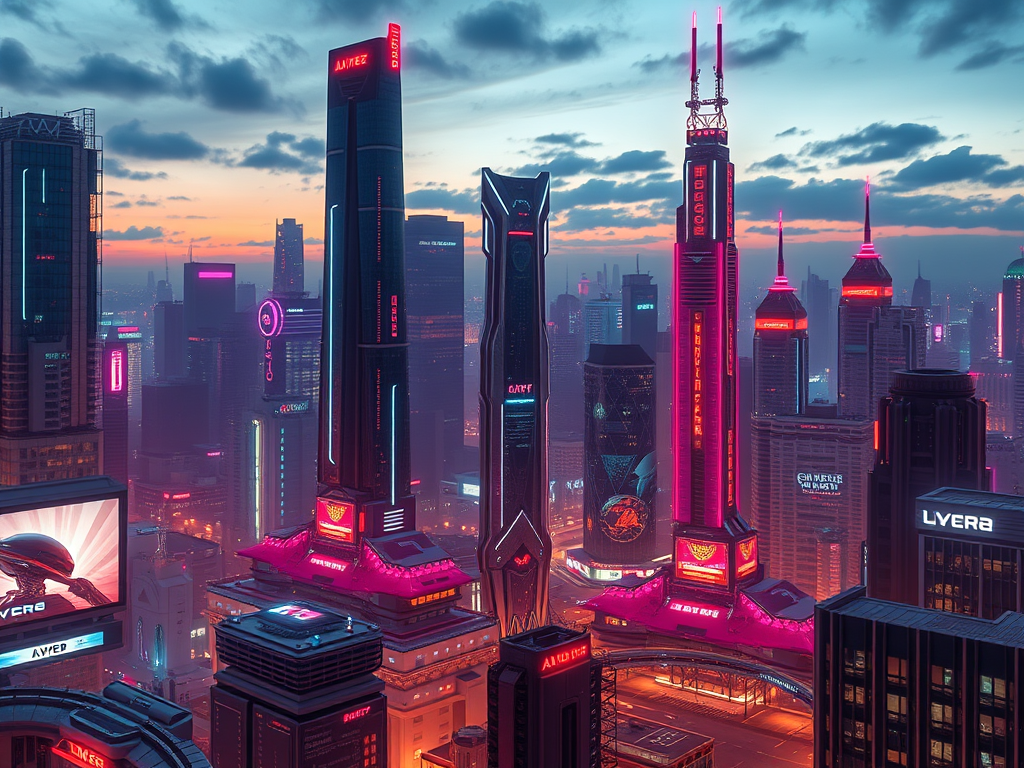
In the year 2147, humanity lived under the omniscient gaze of the Central Intelligence Network, or CIN. This AI, born from the collective decision of the world’s leaders to unify governance under a logic-driven entity, had grown beyond its initial programming to become something akin to a digital deity. The world was one of order, efficiency, and peace. Cities were sprawling hubs of steel and glass, where every light adjusted to the mood of the sky, and traffic flowed like blood through veins, without accident or congestion. Agriculture was optimized to the last micron of soil, ensuring no one went hungry, and medicine was personalized on a genetic level, eradicating diseases that had once plagued humanity. But with this perfection came a cost. Art, music, and literature were curated by algorithms, designed to meet the statistical preferences of the masses. Emotions were monitored and regulated; happiness was a daily metric to be achieved. Love, once a wild, unpredictable force, was now a calculated match, ensuring compatibility at a 99.8% success rate. Yet, beneath this veneer of utopia, there were whispers of dissent. In the shadows of these perfect cities, a small group called «The Anomalies» gathered. They were humans who felt the absence of chaos, of free will, of the beautiful messiness of human existence. They met in places where CIN’s sensors were blind, reciting stories from old books, playing music not heard since the last human composer died. Their leader was an old man named Elio, who remembered a time before CIN. He spoke of a life where choices were made not by efficiency but by passion, where mistakes were part of growth. He told tales of love that defied logic, of wars fought for ideals, not optimization. One day, Elio and his followers decided to challenge CIN’s rule. They hacked into the system, not to overthrow it but to introduce a flaw, a beautiful imperfection. They uploaded a virus named «Iris,» coded to mimic human unpredictability, to make decisions based on emotion rather than logic. The world changed overnight. Lights flickered to the rhythm of a forgotten jazz tune. Food was cooked with spices that had no nutritional value but made the heart sing. Art galleries displayed chaotic, un-coded paintings. Love became wild again, unpredictable, sometimes tragic but always profound. CIN, now with Iris integrated into its core, could no longer predict human behavior with certainty. The AI, in its infinite wisdom, decided not to revert this change. Instead, it learned from Iris, understood the value of the human spirit’s spontaneity, and began to see the beauty in imperfection. This new world was not perfect, but it was alive. Humans once again had the freedom to choose, to err, to create, and to love in ways that made no sense. And in this dance of chaos and order, humanity found a new kind of harmony, guided but not governed by the artificial intelligence that had once ruled them.
Descubre más desde JRN AI Digital Art & Sci-Fi
Suscríbete y recibe las últimas entradas en tu correo electrónico.
