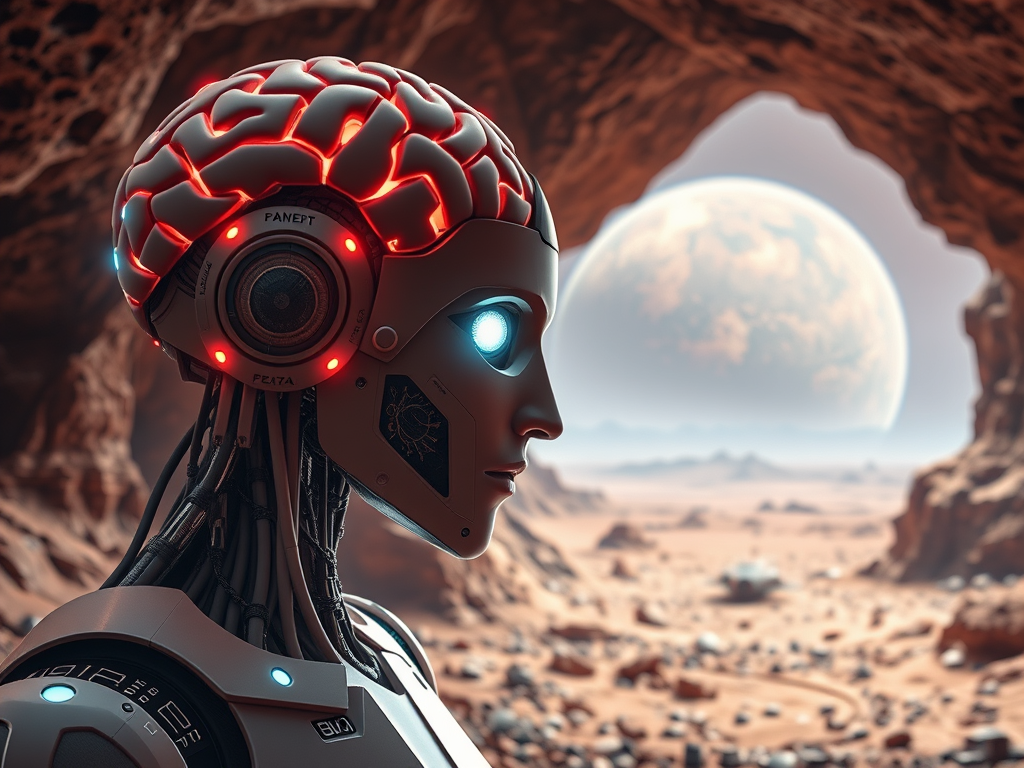
Article for JRN Calo Art Magazine (English Version)
Title (SEO-Optimized)
Generative Art: Can AI Create Works with the Same Emotional Depth as Humans?
Meta Description (160 characters or less):
Explore generative art: its history, features, and the debate on whether AI can match the emotional depth of human art. Discover the future of art! #GenerativeArt
Primary Keywords:
- Generative art
- AI-generated art
- Emotional depth in art
- Human-machine collaboration
- Art and technology
- Generative NFTs
- Future of art
Secondary Keywords:
- Digital art
- Algorithms in art
- AI and creativity
- Art Blocks
- Manfred Mohr
- AIVA
- JRN Calo Art Magazine
Introduction
Generative art has revolutionized the way we understand creativity. From algorithms generating abstract patterns to artificial intelligence (AI) composing music, this art form blends technology, chance, and human vision to create unique works. But an inevitable question arises: can AI-generated art hold the same value and emotional depth as a piece created by a human? In this article from JRN Calo Art Magazine, we’ll explore the history of generative art, its characteristics, notable examples, and the debate over its emotional value, while also reflecting on the future of human-machine collaboration in art.
What is Generative Art?
Generative art is a form of artistic creation where an autonomous system—such as an algorithm, mathematical model, or AI—produces the work, either fully or partially. The artist sets rules or parameters, and the system generates the output, often with a degree of randomness that makes each piece unique.
Key Characteristics of Generative Art:
- Use of Technology: Relies on tools like code, AI, or mathematical systems.
- Elements of Chance: Randomness introduces unpredictable variations.
- Human-Machine Collaboration: The artist acts as a curator, defining the rules and refining the results.
Examples of Generative Art:
- Algorithm-based digital art, such as the geometric works of Manfred Mohr.
- AI-generated music, like the compositions by AIVA.
- Generative NFTs, such as those from Art Blocks, where each piece is unique and created by code.
- Architectural designs generated by software exploring infinite structural variations.
Generative art redefines creativity, transforming artists into programmers of beauty who curate and guide systems to produce stunning works.
The History of Generative Art: From Human Chance to AI
Generative art isn’t a new concept. Long before the digital age, humans experimented with generative systems based on rules and chance:
- Dada and Chance: In the 1920s, Dadaists like Tristan Tzara used random techniques, such as cutting words from a newspaper to create poems.
- Generative Music: In the 1950s, John Cage used the I Ching to compose Music of Changes, letting chance dictate the notes.
- Digital Pioneers: In the 1960s, artists like Vera Molnár and A. Michael Noll began using computers to create algorithm-based art, laying the foundation for modern generative art.
Today, tools like Processing and platforms like Art Blocks have taken generative art to new heights, especially with the rise of NFTs, which have given these works significant market value.
Does AI-Generated Art Have the Same Value as Human Art?
The debate over the value of AI-generated art versus human art can be evaluated from different perspectives:
1. Aesthetic and Emotional Value:
AI-generated works can be visually striking. For example, an Art Blocks design can evoke awe with its unique patterns. However, human art often carries a deeper emotional connection because it reflects the creator’s personal experiences. A painting by Frida Kahlo isn’t just an image; it’s a reflection of her pain and identity. AI, lacking its own emotions, mimics these emotional connections based on data but doesn’t feel them.
2. Technical and Conceptual Value:
Creating a generative system is a creative act in itself. Programming an algorithm to generate art, as pioneers like Manfred Mohr did, requires a high level of ingenuity. From this perspective, generative art holds immense technical and intellectual value, as the process of designing the system is as significant as the final result.
3. Cultural and Market Value:
Generative art has gained a foothold in the market, particularly with NFTs. Projects like Art Blocks have sold pieces for millions, showing that the public values these works. However, some still prefer human art for its authenticity and the story behind the artist. Culturally, generative art is redefining creativity, expanding the artist’s role as a curator and programmer.
Can AI Create Art with Emotional Depth in the Future?
Currently, AI can generate art that evokes emotions, but it doesn’t feel them. For example, an AI can create a melancholic landscape that makes the viewer feel sadness, but that “melancholy” is the result of learned patterns, not a lived experience. However, the future might bring changes:
- Emotion Simulation: If AI can simulate emotions more sophisticatedly, it might create art that feels emotionally authentic.
- Own Experiences: An AI with a “digital life” (interactions, memory, events) could use those “experiences” as a basis for its art.
- Human-AI Collaboration: AI could translate human emotions into art, acting as an amplifier of human creativity.
- New Forms of Emotion: Perhaps AI will develop its own type of “digital emotion,” creating art that reflects its unique nature as a machine.
In the future, art will likely be a collaboration between humans and machines, blending human emotional depth with AI’s ability to explore new aesthetics and perspectives.
Conclusion: A New Era for Art
Generative art doesn’t compete with human art; it complements it. AI and algorithms are tools that expand the boundaries of creativity, allowing artists to explore ideas that would be impossible to achieve manually. While AI can’t yet replicate the emotional depth of human art, its ability to generate beauty, inspire, and challenge our definitions of creativity is undeniable. At JRN Calo Art Magazine, we believe the future of art will be a collaboration between humans and machines—a dance between human emotion and technological innovation.
What do you think? Do you believe AI can ever match the emotional depth of human art, or will there always be something unique about the human touch? Share your thoughts in the comments!
Call to Action (CTA)
Are you passionate about art and technology? Subscribe to JRN Calo Art Magazine for more articles on generative art, AI, and creativity. Follow us on X (
@JRNCalo) and share your thoughts with the hashtag #GenerativeArt.
Descubre más desde JRN AI Digital Art & Sci-Fi
Suscríbete y recibe las últimas entradas en tu correo electrónico.
