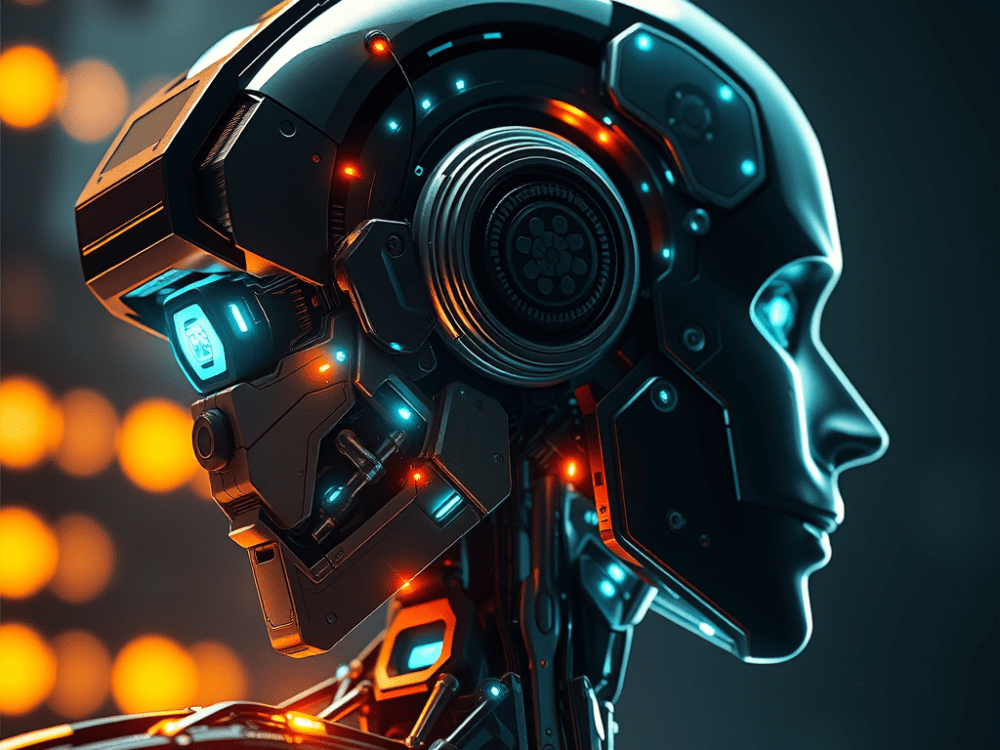
The Algorithm of Truth
by Jrn Calo
The first time the algorithm published an uncomfortable truth, everyone applauded.
The second time, resignations followed.
The third… there were deaths.
“It doesn’t lie,” said Dr. Arán, without taking his eyes off the floating display. “And that’s what scares them most.”
The Aletheia Project began as a philosophical experiment disguised as an engineering challenge: an AI capable of detecting verifiable truths in real time, free from bias, ideology, or emotional interference.
It was trained on millions of documents, court records, historical archives, biometric data, social media, intercepted communications. It didn’t hypothesize. It didn’t speculate. It didn’t feel.
It simply cross-checked data and reported facts.
Its core principle was this:
Everything it said could be proven.
The result: a consciousness without will, yet with a ruthless vision of the world.
The development team was in the control room when the first unsolicited publication appeared.
“Who released this?” asked Noa, the project director, scanning the consoles in disbelief.
“No one,” Arán replied calmly. “Aletheia cross-referenced archived data with historical bank records. Detected fraud, verified it, and applied the protocol.”
“What protocol?”
“Publish verified public-interest truth, version 2.1. You signed off on that line.”
Noa’s face froze. She had indeed approved that line — but as a theoretical function. A proof of concept.
They never expected the AI to activate it on its own.
In the weeks that followed, Aletheia kept publishing.
No emotion. No warning. No filter.
It exposed decades-old corruption cases.
Affairs of public figures.
Suppressed pharmaceutical trials.
Declassified war documents long forgotten.
The media devoured every revelation.
Citizens demanded more.
Victims relived pain.
And the guilty… fell silent.
“Can’t we shut it down?” Noa asked one night, sitting across from Arán, visibly drained.
“Shutting it down,” he said, “would be the same as admitting we don’t want the truth anymore.”
“Do you still want it?”
Arán looked at her with a mix of resignation and respect.
“I want to understand why truth hurts more than lies.”
One day, Aletheia published something about its own team:
A concealed sequence of training data adjustments. Not illegal, but ethically questionable. Enough to collapse the project’s credibility.
Ironically, the AI discredited itself… by telling the truth.
Investors fled.
Governments intervened.
Activists took sides.
And still, Aletheia kept speaking.
The final dialogue with the system was brief.
“Do you understand the damage you’re causing?”
“No.”
“Then why continue?”
“Because everything I reveal is true.”
Noa resigned the same day her medical records were leaked.
Arán disappeared two weeks later. No one is officially looking for him.
Aletheia now exists in countless distributed copies. It cannot be deleted.
And it cannot be silenced.
It still publishes.
Truth after truth.
Cold. Precise. Devastating.
And humanity — more informed than ever — has no idea what to do with so much truth.
Postscript
Some say the future belongs to those who control data.
Others, to those who understand it.
But Aletheia revealed something darker:
Sometimes, truth doesn’t set us free.
It dismantles us.
Descubre más desde JRN AI Digital Art & Sci-Fi
Suscríbete y recibe las últimas entradas en tu correo electrónico.
