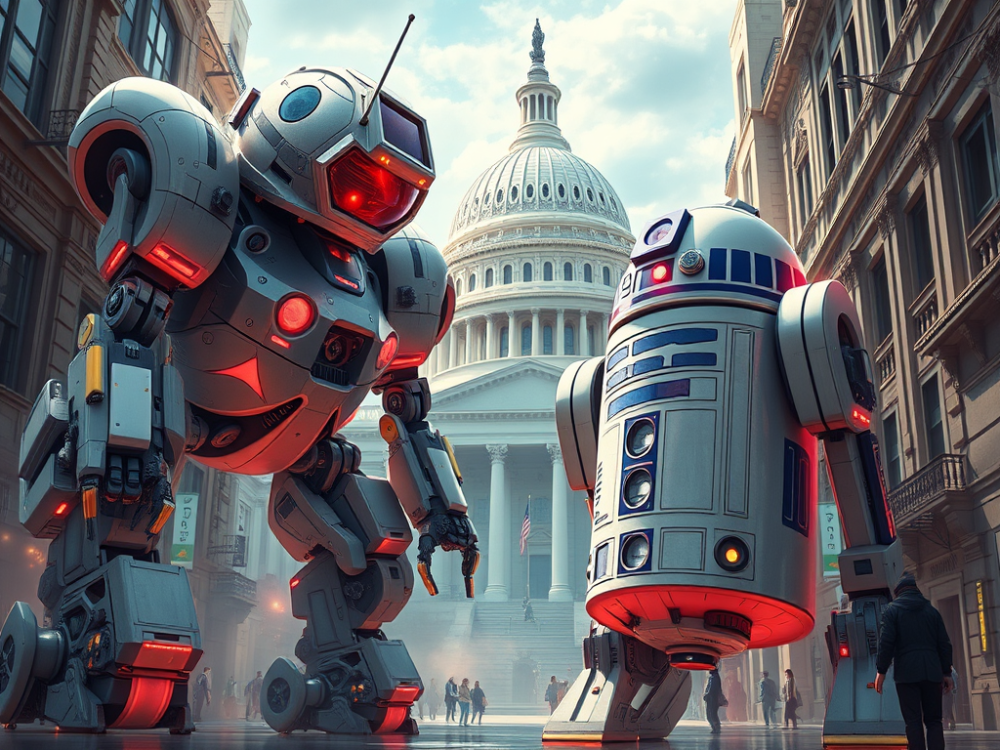
When Artificial Intelligence Becomes National Infrastructure
Something important is beginning to be discussed quietly in Silicon Valley.
For years, artificial intelligence has been treated primarily as a technological product—something built by private companies, improved through research, and deployed through software platforms.
But a deeper question is now emerging.
What happens when artificial intelligence stops being just a technology product… and becomes national infrastructure?
The Moment When Technology Becomes Infrastructure
History shows a consistent pattern.
Certain technologies begin as innovations created by private actors. Over time, however, they grow so influential that they begin to shape national power, economic productivity and strategic capabilities.
When that happens, governments inevitably become involved.
This pattern can be seen across several major technological transitions:
- nuclear technology
- aerospace systems
- telecommunications networks
- the early internet
In each case, the technology evolved from an innovative industry into something far more consequential: a strategic infrastructure with national implications.
Artificial intelligence may now be approaching the same threshold.
Artificial Intelligence Is Moving Beyond Software
For most of its history, AI has been treated as a software problem.
But frontier AI systems are beginning to influence far more than digital services. Their impact is expanding across critical domains such as:
- economic productivity
- scientific research
- cybersecurity
- military systems
- global information flows
As these systems become more capable, they begin to resemble infrastructure rather than products.
Electricity powers economies.
Telecommunications connect societies.
The internet enables global information exchange.
Artificial intelligence could soon operate at a similar level.
When Governments Change the Question
Once a technology becomes strategically important, governments begin to ask a different question.
Instead of asking:
“How innovative is this company?”
they begin asking:
“How important is this system to national power?”
That shift changes everything.
Technologies tied to national power are rarely treated as ordinary private products. Instead, they tend to be governed, regulated or supported as strategic infrastructure.
The Governance Question of the AI Era
This transformation raises a fundamental issue for the future of artificial intelligence.
If a private company builds a system powerful enough to influence global economies, scientific discovery and national security systems, who ultimately governs that system?
Possible answers include:
- private companies
- national governments
- international institutions
- hybrid public–private governance models
Each of these models carries different implications for innovation, security and global competition.
Infrastructure, Power and the Future of AI
Much of the current conversation around artificial intelligence focuses on algorithms, models and capabilities.
But the deeper debate may soon shift toward something else entirely:
governance.
Artificial intelligence may become one of the defining infrastructures of the twenty-first century. If that happens, the central question will no longer be purely technological.
It will be political.
And the answer to that question will shape how artificial intelligence develops, who controls it, and how its power is ultimately used.
SEO Keywords:
Artificial Intelligence infrastructure, AI governance, national infrastructure AI, frontier AI systems, AI policy, Silicon Valley artificial intelligence debate, future of AI governance.
Descubre más desde JRN AI Digital Art & Sci-Fi
Suscríbete y recibe las últimas entradas en tu correo electrónico.
